
Reliquary of strength in Ghost of Yotei: what it actually is
Reliquary of strength is one of the named shrine puzzles in Ghost of Yotei, and it sits in the same family of optional environmental challenges that the game uses to reward players who explore off the main path. The reliquary system, in the broader design of the game, asks the player to solve a small spatial or symbol-based puzzle at a dedicated shrine and then convert that success into a permanent character benefit. The reliquary of strength, as its name implies, leans into physical damage and combat expression rather than into the more defensive or utility-oriented options in the same family.
For a player, the practical question is not what the reliquary category means in the abstract, but what this specific shrine costs in time, what tools it requires, and what it returns. The shrine is designed to be reachable in the mid-game once the player has the traversal and equipment options the puzzle assumes, but it is not gated behind a story-critical path. That placement is deliberate: the reward is meaningful for combat, but skipping it does not block the main quest line.
The reliquary of strength also behaves as a design object worth understanding if you are interested in how Ghost of Yotei structures its optional content. Each named reliquary is meant to be a short, self-contained interaction with a clear input (the puzzle), a clear output (the relic and its effect), and a clear opportunity cost (the time you spend routing toward it instead of pushing the main story). Reading the shrine through that lens makes it easier to decide whether to pursue it on a first playthrough or to defer it to a second.
How the reliquary puzzle system works in Ghost of Yotei
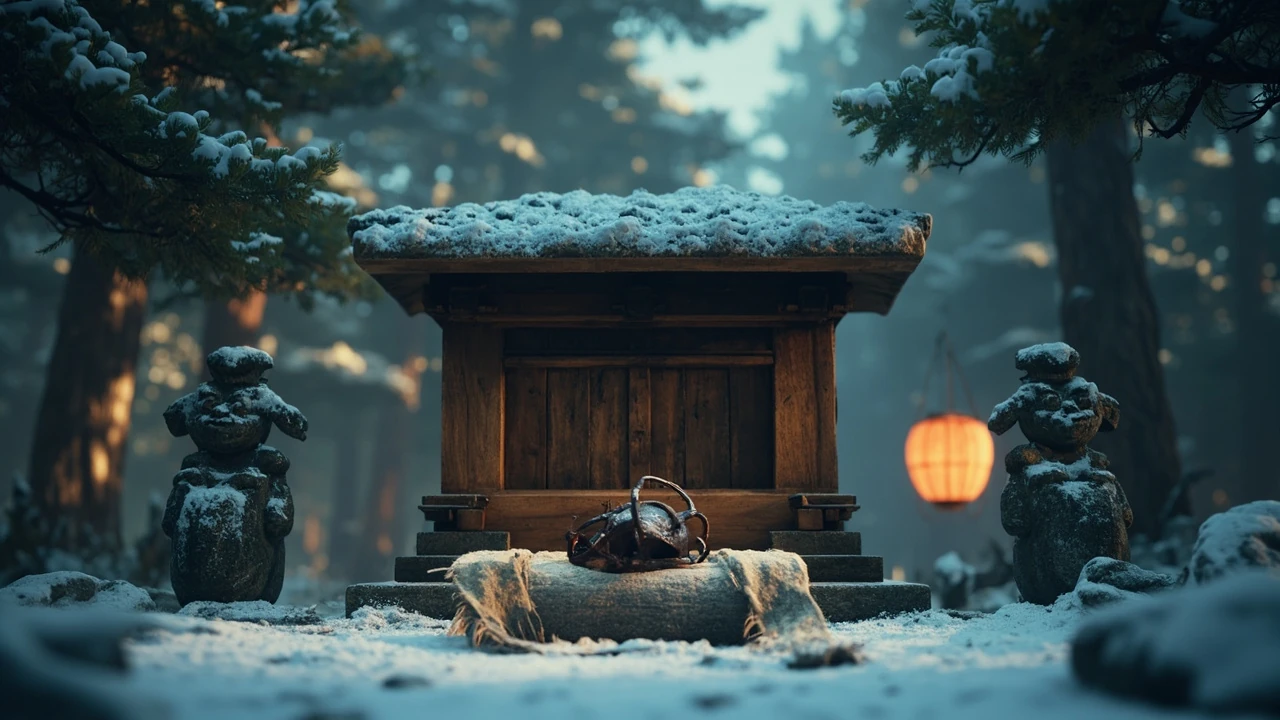
The reliquary shrines in Ghost of Yotei share a common structure. Each shrine presents a small scene with statues, lanterns, or carved markers, and the player has to align symbols, activate objects in a specific order, or carry an offering from one point to another within the shrine area. The puzzle is never procedurally generated, so once a player has seen the pattern for a reliquary, the general approach transfers, but the exact layout and the specific symbols differ per shrine.
The reliquary of strength follows the same pattern. Inside the shrine, the player finds a small arrangement of carved markers that represent a sequence. The puzzle is to interpret the sequence and then interact with the shrine’s elements in the order that the carvings describe. The visual language is consistent across the system, so a player who has already solved one reliquary will recognize the mechanic immediately, while a first-time player should expect a few minutes of observation before committing to an action.
One important design detail is that the shrines are not combat encounters. There is no enemy to defeat inside the reliquary of strength shrine, and the only real failure state is using an offering or consumable in the wrong slot. That structure keeps the puzzle focused on reading the environment, which is a useful design choice because it gives combat-oriented players a different kind of challenge without forcing them into a stealth or platforming detour they are not equipped for.
Where the reliquary of strength fits in the broader relic system
Reliquaries are one source of relics, but not the only one. Ghost of Yotei also distributes relics through main story progression, side quests, and certain vendor interactions. The reliquary of strength is therefore best understood as one reliable mid-game source of a specific kind of relic, not as the only way to obtain relics of its type.
| Source | Typical relic type | Commitment | Best use case |
|---|---|---|---|
| Reliquary shrines (e.g., reliquary of strength) | Combat-focused relics tied to a named theme | Optional exploration and a short puzzle | Players who want a guaranteed, themed reward for exploring |
| Main story beats | Story-signature relics and gear upgrades | Linear, tied to progression | Players following the campaign on the intended path |
| Side quests | Niche or character-locked relics | Variable, depends on the quest chain | Players who want unique build interactions |
| Vendors and merchants | Common and uncommon relics for sale | Currency only, no exploration | Players who would rather spend resources than roam |
The table above is a planning aid, not a drop table. Exact relic pools, vendors, and quest rewards depend on the specific build of Ghost of Yotei you are playing, and the safest source for current details is the official game guide or the verified walkthrough references linked later.
What the reliquary of strength reward actually does
As the name suggests, the reliquary of strength returns a relic that boosts the player’s physical or melee output. The exact stat profile and any conditional effect depend on the relic you receive, so the safest approach is to read the in-game tooltip before swapping it into a build. In general, relics from strength-themed shrines are designed to scale with the player’s existing weapon upgrade path, which means the relic becomes more valuable later in the game even if it looks modest at the moment you obtain it.
Two design notes are worth keeping in mind. First, relics are usually equippable in a limited slot, so the reliquary of strength is best treated as one slot in a build rather than a stackable buff. Second, the relic’s value is highest when the rest of your build already supports its stat, so pairing a strength relic with a weapon that already scales well in that direction is more effective than slotting it into a build that ignores the stat entirely.
How to approach the reliquary of strength on a first run
If this is your first time at the shrine, treat the visit as a short detour rather than a sprint. Walk the perimeter first, because the carvings or markers that encode the puzzle are often visible before you commit to an interaction. Most reliquary puzzles in Ghost of Yotei give the player enough environmental information to solve the puzzle without a guide, but only if you take the time to read the scene.
- Approach the shrine from the entrance the map marker suggests, and check the surrounding area for any path that loops behind the main structure.
- Look for carved markers, lantern colors, or statue poses that repeat. The repeated element is usually the input you need to reproduce.
- Confirm that you have the traversal tool the shrine assumes. Some reliquary puzzles expect a specific climbing or traversal option that has to be unlocked earlier in the game.
- Read the in-game prompt before placing any offering. Offerings are usually not refunded if you use the wrong one.
- If you are stuck, leave the shrine and return after a main story beat. The game’s UI sometimes adds a contextual hint once a related mechanic is fully unlocked.
The same approach transfers to other named reliquaries, including the more defensive or utility-oriented shrines in the same family. If you are building a habit for the rest of the game, the pattern is the same: observe, identify the repeated symbol, and interact in the order the scene suggests.
Common failure modes at the reliquary of strength
For additional context, Most failed attempts at a reliquary shrine come from a small number of recurring mistakes. Identifying which one applies is usually faster than restarting the puzzle from scratch.
| Symptom | Likely cause | What to try first |
|---|---|---|
| No interaction prompt on the offering | Wrong item selected in the radial menu | Open the inventory and confirm the correct offering type before placing it |
| Statue or marker does not respond | Out-of-order activation | Reset the puzzle by leaving the interaction radius and re-entering it |
The table above is intentionally short. For a fuller walkthrough of the puzzle step by step, the verified guide referenced later describes the exact sequence the game expects. The point of the table is to make it easier to triage what kind of problem you are looking at before you commit time to a solution.
Build considerations after you complete the reliquary of strength
Once the relic is in your inventory, the next decision is how to use it. Relics are a build resource, so the value of the reliquary of strength depends on whether the rest of your setup benefits from the stat it boosts. For a player running a melee-focused build, the answer is usually straightforward: equip the relic and adjust the rest of the loadout so the boosted stat is actually consumed by the weapons and techniques you use most.
- Pair the relic with a weapon that scales with the boosted stat, because flat buffs on a non-scaling weapon underperform the same buff on a scaling weapon.
- Avoid stacking relics that all target the same stat. Diminishing returns apply, and the second relic often gives less effective power than a relic that covers a stat you are not already maximizing.
- Re-evaluate the relic slot after each main story weapon upgrade. A relic that felt weak at level one can become a keystone of the build at level three, and vice versa.
- Keep one open relic slot for situational relics. Some encounters reward a different stat profile, and a rigid build loses flexibility in those fights.
None of this advice is specific to the reliquary of strength, and that is the point. The shrine gives you a piece; the build decision is what turns that piece into power. Treating the two as separate problems is usually what separates a player who feels underpowered from one who feels ready for the next difficulty curve.
How the reliquary of strength compares to other named shrines
Ghost of Yotei uses the reliquary naming scheme to telegraph the reward’s theme before the player visits the shrine. A “strength” reliquary boosts damage, a “resilience” reliquary leans toward survivability, and so on. The thematic naming is not just flavor, because the in-game description and the relic’s tooltip usually align with the shrine’s name, which makes the choice between shrines a real decision rather than a guess.
| Reliquary | Theme | Best for | Trade-off |
|---|---|---|---|
| Reliquary of strength | Physical and melee damage | Aggressive, weapon-first builds | Less useful if the build relies on status effects or ranged pressure |
| Reliquary of resilience | Defensive stats and survivability | Frontline and parry-heavy builds | Lower damage ceiling compared to offensive relics |
| Utility-leaning reliquaries | Traversal, resource, or cooldowns | Builds that depend on ability uptime | Direct combat power is usually lower than stat relics |
If you are choosing between shrines, the right question is not which relic is stronger in absolute terms, but which relic complements the build you are already running. A defensive relic in an aggressive build is wasted, and an offensive relic in a defensive build is similarly misaligned.
When it makes sense to skip the reliquary of strength
Not every optional shrine deserves a detour. The reliquary of strength is worth the time on a first playthrough if you are committed to a melee build and you are already near the shrine’s region, because the relic is a small but real power increase and the puzzle itself is short. It is less worth the time if you are pushing the main story on a tight schedule, if your build does not benefit from the relic’s stat, or if you are saving optional exploration for a second playthrough where the reward will compound with a more developed kit.
A common pattern is to clear the relic on the way to a main story objective, then return to the surrounding region for any side content, rather than making a dedicated trip. That routing keeps the detour cost low and lets you treat the reliquary as one stop on a longer path instead of a destination.
Player intent: should the reliquary of strength be on your route?
For a player who is playing Ghost of Yotei for the first time and who enjoys the combat system, the reliquary of strength is a good yes. The puzzle is short, the reward is on-theme, and the shrine is usually reachable once you have the traversal option the puzzle expects. For a player who is speedrunning the main story or who is not invested in the relic system, the shrine is a clean skip without a real cost to the campaign. The decision is genuinely player-specific, which is why the game keeps the shrine optional in the first place.
How the design of the reliquary system reflects broader GameDev thinking
From a game development perspective, the reliquary of strength is a small case study in how optional content can be designed to be discoverable, readable, and meaningful without becoming mandatory. The shrine uses environmental storytelling to teach the puzzle, names the reward so the player can plan around it, and gates the reward behind a traversal option rather than a raw difficulty spike. That combination is a useful pattern for any designer working on optional content, because it keeps the experience fair to players who do engage and harmless to players who do not.
The system also illustrates the trade-off between the depth and the breadth of optional content. A puzzle-heavy shrine teaches a small mechanic, but it cannot compete with a full quest chain in narrative weight. The design choice in Ghost of Yotei is to lean into short, repeatable interactions for the reliquaries, and to save the longer optional experiences for side quests. That separation keeps each piece of optional content focused on a single promise, which is usually what makes optional content feel worth doing rather than feel like padding.
What a verified walkthrough adds on top of this page
This article is meant to give you the structural understanding of the reliquary of strength: what it is, what it costs, what it returns, and how it fits into the rest of the game. For the exact step-by-step solution, including the precise sequence of interactions and the map route to the shrine, the most efficient reference is a verified walkthrough page that documents the shrine in detail. For additional context, Game8’s guide to the reliquary of strength puzzle in Ghost of Yotei covers the puzzle in the level of detail a player needs when they are standing in front of the shrine and want to solve it on the first try. For more general exploration of Ghost of Yotei’s optional content, the same site’s Ghost of Yotei section is a reasonable next stop.
If you are also working through other parts of the game, the broader walkthroughs on this site cover related systems. The Octopath Traveler 0 walkthrough is a useful example of how the same site handles a different RPG’s optional content, and the reliquary of resilience guide covers a sister shrine in the same family. Both are useful comparisons if you are deciding how much of the reliquary system you want to clear in a single run.
Limitations of this guide
This article is built around the structure of the reliquary of strength as a design object and as a player decision. The exact puzzle sequence, the precise map coordinates, and the detailed stat profile of the resulting relic are intentionally not reproduced here, because those details are best read from a current, verified walkthrough at the moment you are playing. If the game updates the shrine, its reward, or its prerequisites, a current guide is a better source than any evergreen article.
Frequently asked questions
Is the reliquary of strength a main story quest or optional content?
It is optional. The shrine is part of the reliquary system, which sits alongside the main story rather than inside it. Completing the reliquary of strength is not required to finish Ghost of Yotei, and skipping it does not block any main story objective.
Do I need a specific traversal tool to reach the reliquary of strength?
Yes, in most cases. The shrine expects a traversal option that is unlocked in the mid-game. If the shrine is not interactive when you arrive, the most likely reason is that the prerequisite tool has not been unlocked yet, and the right move is to return after the next main story beat.
What kind of relic does the reliquary of strength give?
It gives a relic that boosts the player’s physical or melee output, in line with the shrine’s strength theme. The exact stat profile is shown on the relic’s tooltip when you obtain it, and that tooltip is the most reliable source for the specific numbers in your current build.
Can I complete the reliquary of strength without solving the puzzle?
No. The puzzle is the gate. There is no combat shortcut, and there is no consumable that bypasses the shrine’s logic. The puzzle is the entire interaction, which is why the system is designed to be readable from the environment rather than from a stat check.
Does the reliquary of strength scale with my character level?
Relics in Ghost of Yotei generally scale with the player’s existing gear, so the relic becomes more valuable as your weapons and other equipment improve. The shrine itself does not scale with your level, but the reward does.
How does the reliquary of strength compare to the reliquary of resilience?
They sit on opposite ends of the offensive-defensive spectrum. The reliquary of strength rewards aggressive, weapon-first builds, while the reliquary of resilience rewards builds that prioritize survivability. The right choice depends on the rest of your loadout rather than on which shrine is numerically stronger.
Should I clear the reliquary of strength on my first playthrough?
If you are already in the region and your build benefits from the relic’s stat, yes. The detour is short and the reward is on-theme. If you are pushing the main story on a tight schedule, it is a clean skip and the shrine will still be there on a second playthrough.
Where can I find the exact puzzle solution for the reliquary of strength?
For the precise sequence of interactions and the map route to the shrine, use a current verified walkthrough. Game8’s guide to the reliquary of strength puzzle in Ghost of Yotei is the most direct reference, and it documents the puzzle in the level of detail needed when you are standing in front of the shrine.
Will the reliquary of strength be affected by future patches?
It is possible. Optional shrines are sometimes tuned, repositioned, or rebalanced in patches. If you are playing close to a major update, it is worth re-checking the verified walkthrough at the moment you are about to visit the shrine, rather than relying on cached details.
Is the reliquary of strength worth doing on a second playthrough?
Usually yes, especially if the second run uses a different build. The shrine is short, the relic is themed, and the puzzle is still satisfying the second time through. On a focused second run, it is a low-cost way to round out a build that the first run did not prioritize.
Leave a Reply